Competing as a privateer in the AI race
To me, racing is the ultimate expression of engineering. I was raised in a home where church on Sunday was F1, and rooting for Michael Schumacher and Ferrari was the religion. I’d sit and ask my dad about his time racing — I couldn’t get enough of his stories about building his own cars and engines, taking them to Lime Rock with his buddies, and racing against the likes of Roger Penske and Paul Newman.
One of those days made the Lime Rock history book. On July 29, 1967, my dad, Charles Hevenor, was running near the front of the Formula Vee field in his Aardvark, challenging John Zeitler — the defending Area One champion, who’d clawed his way up from the back to hold on to second in his home-built Z-4 (it’s in the book). Formula Vee was a paddock full of homebuilt cars and the men who welded them. The fast guys built their own. That’s what I grew up being inspired by.
By the ’90s that was basically gone from the top levels of autosport — but not for my dad. He kept privateering right through the decade, now in a kart with “Chuck Hevenor” on the nose.
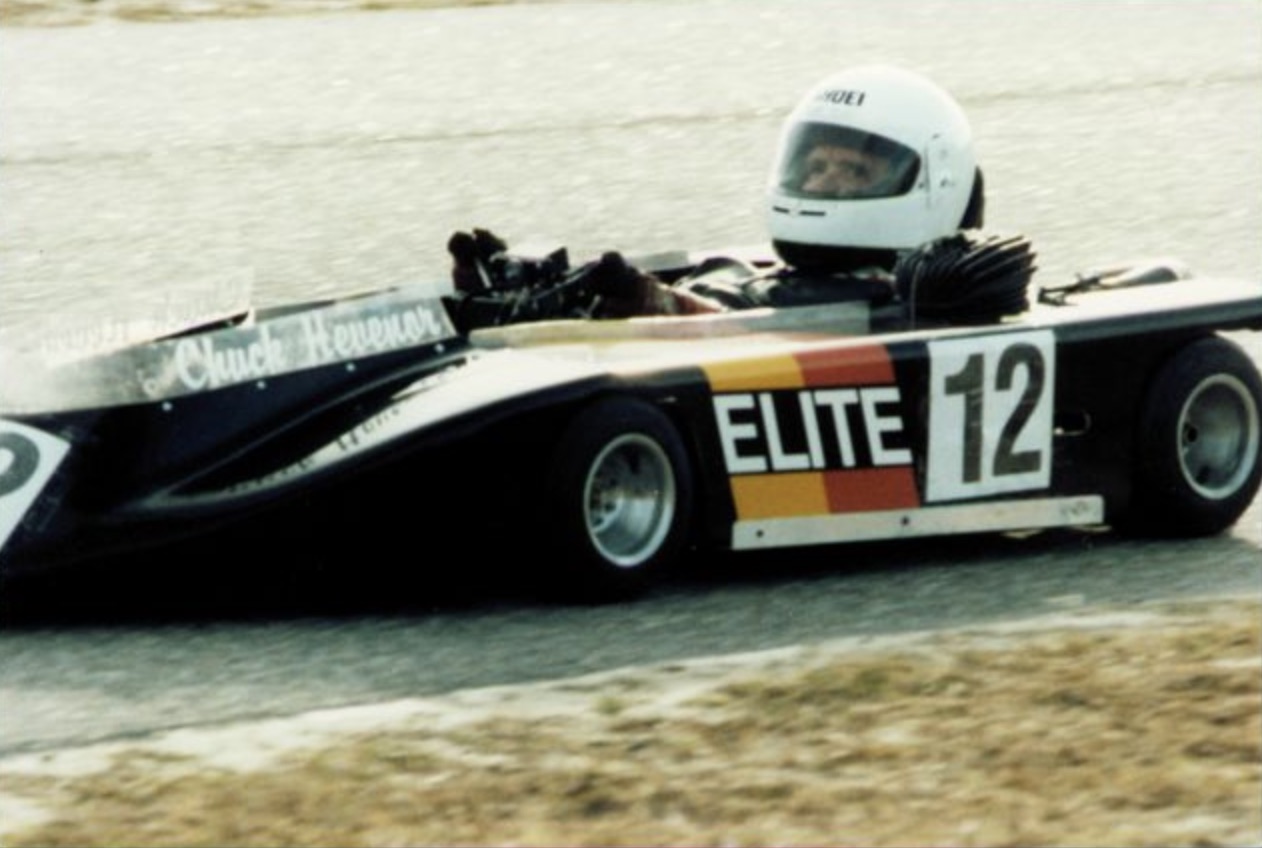
My dad — “Chuck Hevenor,” #12 — still privateering in the ’90s.
I’d found my own version by then: human-powered endeavors, specifically mountain biking, where the privateer was alive and thriving. My dad shared my fascination with cycling technology and World Cup downhill racing. Shout out to Asa Vermette and the Frameworks team for carrying that tradition at the highest level of downhill mountain biking, still in 2026.
Today, F1 is still a pinnacle of engineering, but it’s more about budgets and drama than I find interesting — and the same is true for AI. The labs show up with their billion-dollar budgets, their endless FLOPs, and their datasets to compete. And while Fable gets a lot of the attention, it’s not the interesting story in AI. It’s something else I’m seeing that fascinates, motivates, and inspires me.
The rise of the privateer.
These are the folks building their own harnesses and competing at the highest levels — and they’re frankly where the innovation is happening. It’s the same passion and grit you see in privateer racing culture: a set of people (myself included) maxing their way to independent research and innovation through constraints and intuition.
A famous privateer story, The World’s Fastest Indian, is worth watching if you want cinematic inspiration — Burt Munro in his shed, setting a land-speed record on a 40-year-old Indian motorcycle. But if you want to see how it’s being done in AI, I suggest following Geoffrey Huntley. He’s already built what your lab is trying to build — he taught autonomous agents to write a whole programming language — and he’s happy to share it with you.
Of course, privateers sometimes make it to factory teams. Congrats to Peter Steinberger — whose OpenClaw became the fastest-growing open-source project in GitHub history before he joined OpenAI. And Pi, Mario Zechner’s pared-down harness — whose whole pitch is “there are many agent harnesses, but this one is yours” — is consolidating into a new European kind of entity. Not unlike Frameworks, which isn’t quite privateer status anymore but is still a long way from a factory team.
Today I’m the one teaching. My son and I vibe code together, and we still watch World Cup racing on Sundays. Hopefully my son will look back on our early vibe coding sessions the same way I look back on my dad’s days as a privateer.
In the race for AI, the manufacturers’ championship is being fought by the frontier labs. But the innovation I’m seeing from individuals is what I’ll be watching for on Sunday.